Advocacy & Community Engagement
Advocacy and community engagement are central to how I understand my role as a psychologist.
Psychological science has enormous potential to address social problems and improve the human condition—especially when research, practice, and policy are meaningfully connected. My commitment to this work is both personal and professional.
The APA Ethics Code calls psychologists to promote beneficence, justice, and the public welfare, and I view advocacy as one way of living out those principles in practice.
My advocacy efforts aim to have a ripple effect beyond academia, particularly for individuals and communities affected by poverty and economic marginalization.
Below are a few organizations I currently work with, each reflecting a different way I engage in advocacy: through professional leadership, policy-relevant work, and direct community involvement.
Psychology of Social Class Organization (POSCO)
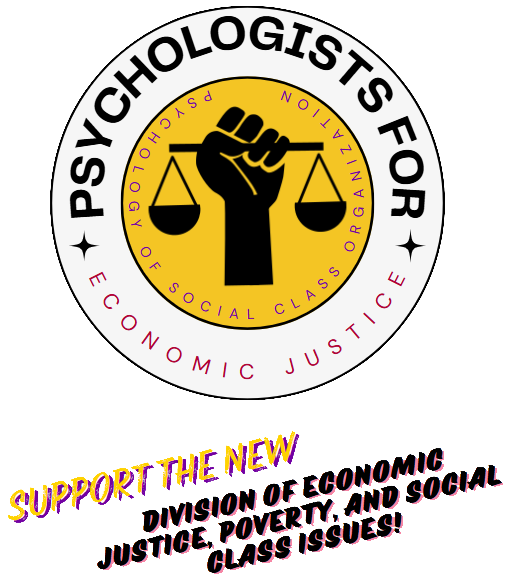
POSCO is a national group of psychologists focused on advancing research, practice, and training related to social class, poverty, and economic inequality, and I currently serve as Treasurer.
A major focus of our current work is establishing a new APA division dedicated to economic justice, poverty, and social class issues (DEPSCI). If you’re a psychologist and an APA member, please consider signing our petition for the new division here.
NeighborLink Fort Wayne
In addition to professional and policy-focused advocacy, I volunteer with NeighborLink Fort Wayne, a community organization that connects neighbors who need help with home and yard projects to volunteers who can assist at no cost.
This work has been especially meaningful to me because it is grounded in relationship-building and mutual care. Volunteering has allowed me to connect with neighbors in tangible ways and to participate in community support beyond academic and professional settings. As I transition to the University of Tennessee, I hope to continue this kind of community-based engagement in Knoxville.

American Psychological Association
Committee on Socioeconomic Status (CSES)
I hold an appointed position on the American Psychological Association’s Committee on Socioeconomic Status (CSES). The committee’s mission is to ensure that issues of socioeconomic status receive sustained and meaningful attention across psychological science, practice, education, and policy.
CSES works to:
Promote scientific understanding of how poverty and socioeconomic status shape health, education, and well-being
Support psychological research and practice that account for socioeconomic context
Advocate for policies aimed at reducing socioeconomic disparities and their psychological consequences
This role allows me to contribute to national-level efforts to integrate socioeconomic considerations into the broader field of psychology.
Collaboration
I am open to additional advocacy or community collaborations when there is a good fit between my skills, interests, and an organization’s mission. If you are interested in working together, feel free to reach out.